
- All
- Product Name
- Product Keyword
- Product Model
- Product Summary
- Product Description
- Multi Field Search

Views: 0 Author: Site Editor Publish Time: 2026-10-23 Origin: Site


Is it safe to leave oxygen running all night? This is one of the most common anxieties patients face when diagnosed with chronic respiratory conditions. Lying in the dark, listening to the rhythmic hum of a machine, it is entirely natural to worry about equipment safety, fire hazards, or power failures during sleep.
The short answer is a definitive yes. Sleeping with an oxygen concentrator is not only safe, but for many, it is a strictly necessary medical intervention. Nighttime therapy prevents dangerous drops in blood oxygen levels, protecting your heart and brain while you rest.
However, the effectiveness and comfort of your nighttime therapy depend heavily on the quality of your equipment. Whether you rely on a standard bedside unit or prefer the absolute silence of tanks filled by advanced compression systems, understanding how this technology works is crucial. In this comprehensive guide, we will explore the safety protocols of nighttime oxygen, how to integrate it with sleep apnea devices, and how commercial-grade engineering ensures you never run out of medical-grade air.
During normal sleep cycles, human physiology undergoes significant shifts. As you drift into deeper stages of rest, your breathing naturally slows down. The tidal volume, which is the amount of air inhaled per breath, noticeably decreases. For individuals with healthy lungs, this slight drop in ventilation goes unnoticed. Yet, for patients battling Chronic Obstructive Pulmonary Disease, pulmonary fibrosis, or severe sleep apnea, this nocturnal slowing can cause blood oxygen saturation to plummet to dangerous levels.
Supplemental nighttime therapy is prescribed specifically to counteract this physiological deficit. Delivering a steady stream of oxygen helps maintain safe saturation levels until morning. Clinical observations consistently show that maintaining adequate oxygenation during sleep dramatically improves overall sleep architecture. Patients wake up feeling refreshed and free from the hypoxia-induced morning headaches that often plague untreated individuals. Simultaneously, this therapy mitigates long-term strain on the cardiovascular system.
A critical decision in your therapy journey is selecting the correct delivery mode. Medical professionals almost universally recommend continuous flow over pulse dose for sleeping patients.
Pulse-dose machines are designed for daytime mobility. They rely on highly sensitive inspiratory triggers, delivering a short burst of air exactly when the machine detects an inhalation. The problem arises when you fall asleep. During deep REM sleep, patients often breathe through their mouths or take incredibly shallow breaths. These subtle, quiet changes can easily fail to trigger the pneumatic sensor of a pulse-dose machine, leaving the patient without necessary respiratory support. Continuous flow bypasses this risk entirely. It ensures a steady, uninterrupted stream of oxygen regardless of how your breathing mechanics shift in the night.
While the medical benefits are undeniable, the mechanical reality of running a concentrator introduces a highly practical challenge: acoustic disruption. The vibrating compressor and occasional purging sounds of sieve beds can disturb the very sleep the machine is meant to improve.
To manage this environmental interference, patients can implement several adjustments. Placing the unit across the room or just outside the bedroom door is a standard solution. Because medical tubing can safely extend up to 50 feet without a significant drop in flow rate, distance acts as an excellent sound barrier. From a practical standpoint, placing the machine on a dense, sound-absorbing foam mat will drastically reduce the low-frequency vibrations that travel through floorboards, creating a much quieter sleeping environment.
Understanding the distinction between generating oxygen and compressing it is vital for both home users and medical facility managers. People often use the terms interchangeably in casual conversation. However, these represent two fundamentally different mechanical processes.
A standard home concentrator is essentially a sophisticated molecular filtration device. It draws in ambient room air, which consists of roughly 78 percent nitrogen and 21 percent oxygen. This air passes through a series of filters before being pushed into cylinders filled with Zeolite, a highly porous mineral. The Zeolite acts as a molecular sieve. It traps nitrogen molecules while allowing pure oxygen to pass through. The machine then delivers this purified gas to the patient at a very low pressure.
While a concentrator generates the pure gas, it lacks the mechanical brute force required to push that gas at high pressures. This is exactly where a medical oxygen compressor becomes an indispensable component of the respiratory supply chain.
A compressor takes the low-pressure output produced by the concentrator and mechanically forces it into a much smaller volume. This drastically increases its pressure, typically measured in PSI or Bar. This high-pressure output is absolutely required for pushing air through complex hospital piping, feeding it into high-resistance CPAP circuits, or storing it securely in metal cylinders.
| Feature | Oxygen Concentrator | Oxygen Compressor |
|---|---|---|
| Primary Function | Generates pure oxygen from ambient air via Zeolite sieves | Pressurizes already purified oxygen for storage or high-resistance delivery |
| Output Pressure | Very Low, typically under 10 PSI | High, ranging from 50 PSI to over 2000 PSI |
| Typical Application | Direct patient breathing at the bedside | Filling cylinders, CPAP integration, and hospital piping networks |
When dealing with concentrated medical gases, the internal engineering of the machinery dictates not only the purity of the air but the fundamental safety of your bedroom environment.
In standard industrial applications, air compressors rely heavily on petroleum-based oils to lubricate moving pistons, reduce friction, and dissipate heat. Introducing oil into an oxygen-rich environment, however, creates a catastrophic safety hazard. Pure oxygen acts as a powerful accelerant. If pressurized gas comes into contact with even microscopic droplets of lubricating oil or hydrocarbon vapors, it can trigger spontaneous combustion.
Beyond the severe fire risk, inhaling oil vapors is highly toxic from a biological standpoint. Minute traces of aerosolized oil can bypass the body's respiratory defense mechanisms. These particles accumulate deep within delicate lung tissue, causing severe chemical pneumonitis.
To completely eliminate these severe risks, modern medical-grade systems utilize an oil free oxygen compressor. Instead of liquid lubricants, these advanced machines are engineered with self-lubricating materials. The internal piston rings, seals, and guide bands are typically manufactured from specialized Polytetrafluoroethylene composites or advanced ceramics.
Because there is zero oil in the crankcase or cylinder, the risk of hydrocarbon contamination drops to zero. For patients relying on overnight therapy, this specific technology guarantees that the air delivered to their lungs is pure, odorless, and medically safe. This strict adherence to global health purity standards ensures complete peace of mind during sleep.
For patients suffering from overlap syndrome, a complex condition where emphysema coexists with Obstructive Sleep Apnea, a standard bedside concentrator alone is insufficient. These individuals require the positive airway pressure of a CPAP or BiPAP machine combined directly with supplemental oxygen.
Integrating these therapies is a standard clinical protocol known as the bleed-in method. Because CPAP machines blow pressurized room air, they do not inherently provide concentrated oxygen. To combine them, a small bleed adapter is installed between the CPAP machine air outlet and the standard hose. The oxygen tubing connects to this adapter, allowing the pure gas to mix seamlessly with the pressurized air traveling toward the patient mask.
Specifically, integrating these systems introduces a unique pneumatic challenge. The CPAP machine generates positive forward pressure to keep the airway open. If your oxygen source cannot produce enough forward momentum, the CPAP airflow will push back against the tubing, halting the oxygen delivery entirely.
To overcome this resistance, the delivery system must utilize a reliable oxygen booster compressor. This internal component ensures that the pure gas is expelled with sufficient kinetic force to continuously breach the CPAP pressure barrier. By doing so, it guarantees a steady, accurate prescription of oxygen throughout the entire sleep cycle. The patient never wakes up gasping for air.
For many patients, the ambient noise of a bedside machine remains intolerable, disrupting their ability to reach deep REM sleep. In these scenarios, transitioning from a continuous bedside machine to pre-filled cylinders offers the ultimate solution for quiet, secure sleep.
Historically, patients relying on silent tanks for sleep had to depend entirely on medical gas delivery services. While functional, this model presents significant logistical vulnerabilities. Waiting for scheduled deliveries can be highly inconvenient. More importantly, relying on external suppliers introduces a critical anxiety factor: the fear of running out of air in the middle of the night. If a severe winter storm delays a delivery truck, not having immediate access to backup oxygen becomes a severe medical emergency.
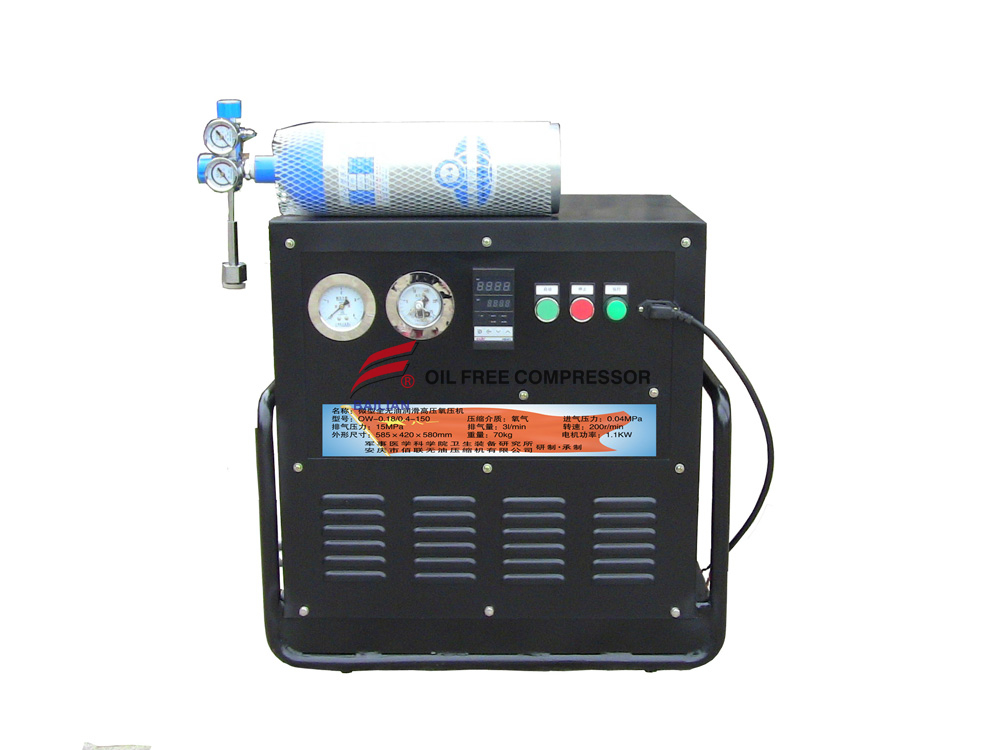
To solve the logistical and financial burdens of delivery services, the medical engineering industry developed home-fill systems. At the heart of this solution is the oxygen cylinder filling compressor.
This specialized equipment connects directly to a standard concentrator. While the patient is awake, the concentrator generates pure gas. The filling compressor safely pressurizes it, often up to 150 bar, forcing it into portable aluminum or steel cylinders. A standard 1 cubic meter per hour micro-boost unit can easily fill multiple bedside tanks during the day. At night, the patient simply attaches a regulator to the freshly filled cylinder, places it next to their bed, and enjoys a completely silent, continuous flow of oxygen. Generating and storing your own medical gas ensures that emergency backup is always available.
Moving beyond the residential setting, the demands placed on respiratory equipment in commercial healthcare environments require industrial-scale engineering. Sleep labs, nursing homes, and respiratory clinics cannot rely on standalone bedside units for dozens of patients.
In a professional sleep laboratory, patients are monitored overnight to diagnose nocturnal hypoxemia and other disorders. Having individual machines in each monitoring room is impractical. The noise would ruin the sleep studies, and managing dozens of units introduces too many points of failure.
Instead, these facilities employ a centralized high pressure oxygen compressor system. Located in a soundproofed utility room, this heavy-duty machine pressurizes pure oxygen and distributes it through a complex manifold and copper piping network. This architecture allows the facility to deliver precise, silent, wall-mounted oxygen directly to the patient bedside, ensuring optimal conditions for sleep monitoring.
Furthermore, the mechanical tolerances for clinical compressors are exceptionally stringent. Engineered for continuous duty cycles, these systems incorporate redundant fail-safes. They feature advanced thermal management to prevent overheating, low RPM designs to reduce wear, and automated switchover valves. If the primary system requires maintenance, backup cylinder banks engage instantly. For vulnerable sleeping patients, a drop in oxygen pressure is simply not an option.
Looking at the broader landscape of respiratory care, a clear shift is occurring in how patients and providers approach nighttime oxygen therapy. Based on recent market analysis and search trends surrounding sleep safety, there is a massive consumer push away from bulky, noisy bedside units toward decentralized, independent solutions. Patients are actively seeking ways to untether themselves from the limitations of external gas delivery schedules.
This demand is driving rapid innovation in micro-compression technology. Manufacturers are focusing heavily on developing smarter, energy-efficient, and ultra-quiet compressors that allow patients to fill their own cylinders at home with minimal electricity. In addition, the rising prevalence of overlap syndrome has forced the industry to create better integration tools. Modern engineering ensures that high-pressure oxygen delivery systems communicate flawlessly with smart CPAP machines. The future of nighttime therapy is undeniably leaning toward silent, oil-free, and highly autonomous systems that prioritize both clinical safety and patient comfort.
Selecting the correct generation and compression equipment is a high-stakes decision that directly impacts patient health, operational costs, and safety compliance. Whether you are a home user or a facility manager, evaluating the hardware specifications is critical.
When evaluating equipment for residential sleep therapy, the decision matrix should focus on usability, acoustic output, and long-term reliability.
Facility managers must prioritize regulatory compliance, output scaling, and total cost of ownership when procuring infrastructure.
Sleeping with an oxygen device safely improves your breathing, protects your vital organs, and is a life-sustaining practice for many respiratory patients. While the thought of running medical equipment overnight can initially cause anxiety, understanding the mechanics behind the therapy offers profound peace of mind.
From silent home-fill cylinders to the centralized networks in professional sleep labs, advanced compressor technology guarantees the purity and reliability of your air. By prioritizing oil-free, medical-grade devices, you ensure a quiet, restful, and entirely safe night. Always consult a sleep specialist or pulmonologist before adjusting your flow rates. If you are ready to upgrade your nighttime therapy or outfit a clinical facility, explore the certified solutions at https://www.oxygen-compressors.com to find the exact engineering match for your respiratory needs.
No, the machines themselves are not inherently flammable, and they do not spontaneously combust. However, it is crucial to understand that oxygen is an oxidizer, meaning it violently supports and accelerates combustion. If a spark or flame occurs near a concentrated oxygen source, the fire will burn much hotter and faster. To sleep safely, keep the machine and your tubing at least 10 feet away from open flames, space heaters, and lit fireplaces. Never smoke in the same room as your equipment.
An audible alarm in the middle of the night is a built-in safety feature designed to alert you to a disruption in your therapy. The most common cause is a power interruption, even a brief surge or outage. Other frequent triggers include a kink or blockage in your tubing that restricts airflow, or a clogged intake filter that causes the internal temperature to rise. If the machine detects that the purity has dropped below medical standards, it will also sound an alarm to wake you up.
Yes, this is a highly recommended practice for patients who are sensitive to noise. Many individuals use their filling equipment during the daytime to safely pressurize pure gas into portable cylinders. At night, they turn off the main machinery and breathe exclusively from the filled cylinders. This method provides a completely silent source of continuous-flow air, significantly improving overall sleep quality without sacrificing respiratory support.
A standard continuous-flow home unit typically consumes between 300 to 600 watts of electricity per hour, depending on the model and the prescribed flow rate. Running this equipment for 8 hours every night will result in a noticeable increase in your monthly utility bill. Nevertheless, the medical benefits of maintaining healthy blood oxygen saturation far outweigh the electrical costs. Some local utility companies also offer medical baseline financial assistance for patients running life-support equipment.
A standard medical compressor is typically found inside a concentrator. Its job is to draw in ambient room air and push it through the sieve beds at a moderate pressure to separate the nitrogen from the oxygen. In contrast, a booster system does not draw ambient air. Instead, it takes oxygen that has already been purified and concentrated, and drastically amplifies the pressure. Boosters are specifically used when gas needs to be compressed tightly enough to overcome CPAP resistance or to fill high-pressure storage cylinders for later use.
You must strictly follow the prescription provided by your healthcare provider. Often, a doctor will prescribe a slightly higher flow rate for nighttime use compared to daytime activity, because your breathing naturally becomes shallower during sleep. Never adjust your nighttime liters per minute without consulting your doctor, as they rely on overnight pulse oximetry tests to determine the exact pressure required to keep your blood saturated safely.
Most modern medical devices are built with internal surge protection to handle standard electrical fluctuations. However, a sudden, severe power spike following an outage can potentially damage the sensitive internal circuitry or the compressor motor. To protect your investment and ensure uninterrupted sleep, engineers highly recommend plugging your oxygen equipment into a high-quality surge protector or an uninterruptible power supply system.