
- All
- Product Name
- Product Keyword
- Product Model
- Product Summary
- Product Description
- Multi Field Search

Views: 0 Author: Site Editor Publish Time: 2026-10-23 Origin: Site


Did you know pure oxygen aggressively accelerates fire? Handling it safely requires highly specialized equipment. Whether you manage a bustling hospital respiratory wing or oversee a heavy-duty industrial plant, delivering this vital gas at precise pressures is an absolute necessity. An oxygen compressor safely pressurizes this highly reactive gas. It acts as the critical bridge between bulk generation and practical application.
In this comprehensive engineering guide, we dive deep into the mechanics of these machines from a field perspective. You will learn exactly how they operate, the underlying physics of gas pressurization, and the non-negotiable safety protocols required to run them efficiently.
An oxygen compressor is a highly specialized mechanical device engineered to reduce the volume of oxygen gas, thereby increasing its internal pressure. This process is essential for storing oxygen in high-pressure cylinders or feeding it into industrial pipelines that require specific pressure thresholds. Because oxygen is a strong oxidizer that violently accelerates combustion, these machines are built with stringent material specifications and zero-tolerance policies for oil and grease.
A common point of confusion in gas management is the difference between a concentrator and a compressor. Understanding this distinction is vital for facility managers and technical buyers. We often see facilities misallocate budgets because they confuse gas generation with gas pressurization.
An oxygen concentrator extracts oxygen from ambient atmospheric air, comprising roughly 21 percent oxygen and 78 percent nitrogen, using Pressure Swing Adsorption technology. Its output pressure is generally low. In contrast, a compressor takes that already purified gas and uses mechanical volume reduction to boost it to extreme pressures. Standard air compressors cannot be repurposed for this task. Traditional pneumatic systems rely on hydrocarbon-based lubricating oils. If pressurized oxygen interacts with even microscopic amounts of these oils, the resulting chemical reaction can cause a catastrophic explosion.
| Feature | Oxygen Concentrator | Oxygen Compressor |
|---|---|---|
| Core Function | Generates pure oxygen from ambient air | Pressurizes already purified oxygen |
| Output Pressure | Low typically 3 to 6 bar | High typically 150 to 200 bar |
| Internal Lubrication | Standard pneumatics acceptable | Strictly oil-free PTFE materials only |
| Primary Use Case | Direct low-pressure supply | Cylinder filling and high-pressure storage |
The fundamental physics of gas compression rely on Boyle’s Law, which states that the pressure of a gas is inversely proportional to its volume when temperature is held constant. By mechanically forcing oxygen molecules into a smaller chamber, the pressure naturally rises. However, this mechanical work generates significant adiabatic heat, requiring complex thermal management. As engineers, managing this thermal load is our primary concern during system design.
Specifically, the operation begins when low-pressure oxygen enters the unit. This gas is often supplied directly from a local plant, a liquid vaporizer, or a low-pressure facility pipeline. The intake valve opens as the machine piston moves downward. This creates a targeted vacuum effect, drawing the gas smoothly into the compression cylinder. Precision engineering of these intake valves ensures that absolutely no reverse flow occurs during the cycle.
Once the cylinder reaches its maximum volumetric capacity, the intake valve seals shut. The mechanical drive then pushes the piston upward. As the internal space of the cylinder rapidly decreases, the oxygen molecules are forced closer together. Consequently, this kinetic energy directly translates into a rapid spike in both pressure and temperature.
Compressing any gas generates intense heat. In an oxygen-rich environment, elevated temperatures pose a severe flammability hazard. To mitigate this, cooling mechanisms are structurally integrated into the compression cycle. Smaller units designed for intermittent use often utilize air-cooled systems, relying on large external fins and high-velocity fans to dissipate heat. For continuous-duty industrial units, water-cooled systems are mandatory. These employ a continuous flow of chilled water circulating through jackets surrounding the cylinders, ensuring superior thermal stability.
When the internal pressure of the cylinder exceeds the mechanical resistance of the discharge valve, the valve opens. The newly pressurized, temperature-stabilized oxygen is forced out of the chamber. It is then directed into a high-pressure manifold, a storage tank, or a facility pipeline. This precise cycle repeats at hundreds of rotations per minute.
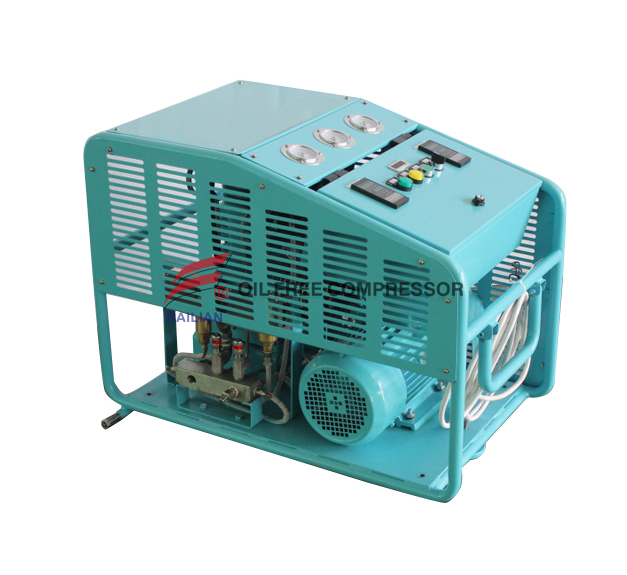
Selecting the correct architecture depends entirely on your required flow rate, purity standards, and target pressure. The industry categorizes these machines into several specific configurations to meet distinct operational intents. Matching the machine to the operational reality on the ground is critical for longevity.
Because of the extreme fire risks associated with hydrocarbons, the absolute industry standard is the oil free oxygen compressor. Instead of using liquid lubricants, these machines utilize advanced material science to prevent friction. The piston rings and guide bands are typically manufactured from Polytetrafluoroethylene, commonly known as PTFE, often reinforced with carbon or bronze. These dry-running materials provide intrinsic lubrication without introducing combustible compounds into the gas stream.
Certain heavy industries and aerospace applications demand extreme pressure thresholds. These multi-stage systems process the gas through a series of progressively smaller cylinders. A robust high pressure oxygen compressor will route the gas through an intercooler after each stage of compression. This reduces the gas temperature before it enters the next stage, preventing catastrophic thermal overload.
Serving a very specific logistical function, an oxygen booster compressor does not draw gas from atmospheric pressure. Instead, it takes oxygen that is already moderately pressurized and boosts it to a significantly higher pressure. For example, a standard 2 cubic meter per hour industrial booster will take an inlet pressure of 3 to 4 bar and elevate it to a final discharge pressure of 150 bar. This method is highly energy-efficient because the initial compression work has already been completed.
Operating high-pressure gas equipment is not comparable to running standard pneumatic tools. When a technician approaches the control panel, their first task is not simply pushing a button. It requires strict adherence to standardized operating procedures to mitigate safety risks.
Before engaging the power supply, operators must conduct a rigorous physical audit. This involves ensuring the immediate environment, operator hands, and tools are entirely free of oil, grease, or hand lotions. Technicians should inspect all high-pressure hoses and fittings using approved oxygen-safe leak detection fluids. In addition, confirming that the room ambient ventilation system is active is critical to prevent dangerous oxygen enrichment in the air.
A sequenced startup prevents mechanical shock and thermal spikes. Always initiate the cooling system before introducing gas or starting the motor. Slowly open the low-pressure supply valve to allow gas to enter the initial chamber. Once the system is primed, engage the primary drive motor. Observe the initial rotation to ensure smooth mechanical engagement without severe vibrations.
Active monitoring is required throughout the entire cycle. Operators must rely on empirical data from the machine instrumentation. Continuously monitor inter-stage and final discharge pressure gauges to ensure they remain within the manufacturer specified parameters. Watch the discharge temperature closely. A sudden spike often indicates a failing valve. Furthermore, listen for abnormal acoustic profiles. Hissing indicates a high-pressure leak, while rhythmic knocking suggests premature wear on the PTFE piston rings.
Improper shutdown can leave highly pressurized gas trapped in vulnerable components. To power down safely, isolate the supply by closing the low-pressure intake valve first. Allow the machine to run for a few additional seconds to push the remaining oxygen out of the cylinders. Turn off the main drive motor, then safely open the designated vent valves to bleed off any trapped residual pressure. Leave the cooling system running for an additional five to ten minutes to dissipate lingering thermal energy.
The deployment of these pressurization systems spans multiple sectors. Each sector presents unique regulatory and technical demands that dictate the equipment design.
In healthcare environments, a medical oxygen compressor is the backbone of respiratory therapy logistics. These units are deployed to pressurize oxygen generated by hospital plants, pushing it into the central piping network that delivers gas directly to patient bedsides and operating theaters. They must comply with stringent international standards to guarantee that no particulate matter or chemical contaminants compromise patient safety.
In remote clinics, mining camps, and commercial gas distribution plants, an oxygen cylinder filling compressor is utilized to package bulk gas into transportable units. These systems typically take oxygen at 3 to 4 bar and compress it to standard cylinder pressures of 150 to 200 bar. A high-capacity filling station can process dozens of cylinders simultaneously through a high-pressure manifold, making it a critical asset for supply chain logistics.
Beyond healthcare, oxygen is a vital industrial chemical. In steel smelting, pressurized oxygen is injected into blast furnaces to raise combustion temperatures and remove impurities from iron. In metal fabrication, high-pressure streams are paired with acetylene for precision cutting and welding. Glass blowing and chemical oxidation processes also rely heavily on continuous pressurization, necessitating robust systems capable of continuous operation.
Handling pressurized oxidizers requires a rigorous approach to workplace safety. Oxygen itself is not flammable, but it significantly lowers the ignition threshold of other materials. Adhering to empirical safety standards is a fundamental operational baseline.
This is the golden rule of oxygen management. Hydrocarbons found in standard lubricants, greases, and even human skin oils have a low auto-ignition temperature. When exposed to pure oxygen under high pressure, the friction or adiabatic heat can cause these hydrocarbons to spontaneously combust. All maintenance must be performed with degreased tools. Only specialized, oxygen-compatible synthetic lubricants may be used on external bearings that are completely isolated from the gas path.
Even minor micro-leaks can lead to oxygen enrichment in the surrounding room. Normal atmospheric air contains 21 percent oxygen. If a room concentration rises above 23.5 percent, the environment becomes highly volatile. Materials that are normally fire-resistant can ignite easily and burn fiercely. Facility rooms must be equipped with active exhaust fans and continuous ambient monitors configured to trigger audible alarms if thresholds are breached.
Oxygen reacts aggressively with many standard industrial materials. Therefore, the internal wetted parts of these machines are constructed from specific alloys. Stainless steel, brass, and Monel are standard because they resist oxidation and have high ignition thresholds. Standard carbon steel is generally avoided in high-pressure paths due to its susceptibility to sparking. All seals and O-rings must be made from Viton or PTFE, never standard nitrile rubber.
Empirical data dictates that preventative maintenance is far more cost-effective than reactive repairs. Because these units operate without liquid lubrication in the compression chamber, the wear dynamics differ significantly from standard pneumatic systems.
Operators should perform a standardized visual and mechanical audit daily. For water-cooled units, verify the coolant reservoir levels and ensure the water flow rate meets the manufacturer baseline. For air-cooled units, inspect the cooling fins for dust accumulation, which can insulate the metal and cause thermal retention. Always verify that inlet pressures do not drop below the specified minimum. A pressure drop could cause the machine to draw a vacuum and pull in ambient contaminants.
The internal sealing mechanisms rely on self-lubricating PTFE composites. Over time, these materials intentionally wear down to create a microscopic friction-reducing film on the cylinder walls. Piston rings and guide bands typically require replacement every 2,000 to 4,000 hours of operation. Valve reeds, which control directional gas flow, should be inspected regularly. A failure here usually manifests as abnormally high discharge temperatures.
When performing maintenance, any replacement parts must be cleaned to strict oxygen service standards. Technicians must use specialized, non-hydrocarbon solvents to remove particulate matter and microscopic residues. Standard industrial cleaners are strictly prohibited as they leave combustible residues behind. After cleaning, components must be thoroughly dried using nitrogen or oil-free compressed air before reassembly.
Looking at recent shifts in the industrial and medical gas sectors, there is a clear evolution in how facilities manage gas pressurization. Historically, many hospitals and industrial plants relied entirely on bulk liquid oxygen deliveries. However, recent global supply chain disruptions have accelerated a massive shift toward decentralized, on-site oxygen generation and compression.
Modern compressors are becoming increasingly intelligent. We are seeing a rapid integration of Internet of Things sensors directly into the compression chambers. These smart sensors provide real-time data on discharge temperatures, inter-stage pressures, and vibration acoustics. Instead of waiting for a component to fail, predictive maintenance algorithms now alert facility managers to replace a PTFE guide ring weeks before it compromises machine efficiency. Furthermore, energy efficiency is taking center stage. Variable frequency drives automatically adjust the motor speed to match real-time gas demand, drastically reducing electricity consumption and mechanical wear.
Procurement requires a precise calculation of your facility operational demands. Over-sizing equipment leads to inefficient energy consumption and excessive wear from frequent start-stop cycles. Under-sizing results in thermal overload and rapid part failure.
The primary metric is the volume of gas you need to process per hour. Calculate your peak consumption rather than your average. For example, a modular 2 cubic meter per hour unit is perfect for a small medical clinic filling backup cylinders. However, a large industrial fabrication plant may require systems capable of pushing hundreds of cubic meters per hour.
Understanding the pressure differential is crucial. Where is the gas coming from? If it is supplied by a local generator, the inlet pressure is usually low, around 3 to 4 bar. What is your end-use requirement? Feeding a hospital pipeline might only require 5 to 6 bar, whereas filling transportable storage tanks will require a robust system capable of reaching 150 to 200 bar.
The choice between air-cooled and water-cooled systems depends entirely on your duty cycle and operating environment. Air-cooled units are easier to install and maintain, making them ideal for intermittent use or portable setups. Water-cooled units require a dedicated plumbing infrastructure and chiller system, but they provide superior thermal regulation. This makes them absolutely necessary for large-scale machines operating continuously.
Operating this equipment safely and efficiently requires a deep understanding of its core mechanics, from the initial intake phase to the final high-pressure discharge. Because of the highly reactive nature of pure oxygen, operators must strictly follow oil-free safety protocols and maintain pristine environmental conditions.
Routine maintenance of cooling systems, valves, and PTFE seals is the ultimate safeguard against thermal hazards and mechanical failure. Whether you are outfitting a medical facility with life-saving respiratory gas or powering an industrial fabrication plant, taking the time to calculate your exact flow rates and pressure requirements will ensure you select the perfect equipment. Ready to upgrade your facility gas management system? Explore high-performance, strictly oil-free solutions at https://www.oxygen-compressors.com to find the exact model that meets your rigorous operational demands.
Absolutely not. Regular air compressors rely on petroleum-based oils to lubricate their internal pistons, bearings, and crankcases. Pressurized oxygen is a severe oxidizer. If pure, pressurized oxygen comes into contact with even a microscopic droplet of oil or hydrocarbon grease, it will cause an immediate, violent explosion. You must exclusively use a dedicated, strictly oil-free machine designed specifically for oxygen service.
The primary difference lies in the inlet pressure dynamic. A standard compressor typically draws gas from atmospheric pressure and compresses it to a higher state. A booster is designed to take gas that is already moderately pressurized, for example, from a 4 bar pipeline or a cryogenic liquid tank vaporizer, and mechanically boost it to a significantly higher pressure, such as 150 bar, for storage or specific industrial applications.
The filling time is a mathematical function of the unit volumetric flow rate and the physical water volume of the receiving cylinder. For example, a high-capacity industrial filling station can fill a manifold of ten 50-liter cylinders to 200 bar in less than an hour. Conversely, a smaller 2 cubic meter per hour portable unit designed for medical backup may take several hours to fill a single large cylinder.
The laws of thermodynamics dictate that compressing any gas rapidly decreases its volume and drastically increases its internal kinetic energy, which manifests as heat. Because oxygen is highly reactive and accelerates combustion, allowing the gas to become too hot creates a severe safety hazard. Cooling systems extract this heat during and after the compression stages, keeping internal temperatures well below the auto-ignition thresholds of the friction materials.
In a well-maintained system operating within normal thermal parameters, dry-running PTFE piston rings and guide bands typically last between 2,000 and 4,000 operational hours. However, running the machine at excessively high temperatures or allowing particulate contamination into the intake stream will drastically reduce this lifespan, requiring premature replacement.
This depends entirely on the cooling architecture. Small, air-cooled units are generally designed for intermittent duty cycles and require rest periods to dissipate heat. If you need continuous, 24-hour operation, you must select a heavy-duty, water-cooled industrial model specifically rated for continuous duty to prevent thermal overload and mechanical failure.