
- All
- Product Name
- Product Keyword
- Product Model
- Product Summary
- Product Description
- Multi Field Search

Views: 0 Author: Site Editor Publish Time: 2025-11-20 Origin: Site


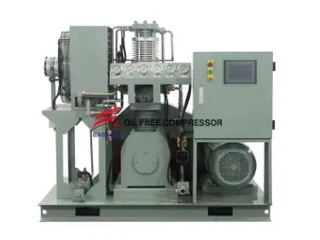
In the world of industrial production, compressed gases play a vital role in ensuring processes run smoothly, safely, and efficiently. Among these gases, nitrogen is one of the most commonly used, thanks to its inert properties and versatility. From creating controlled atmospheres to cooling components and enhancing chemical reactions, nitrogen has a broad range of applications across various industries. But how is nitrogen delivered in large volumes and at the necessary pressure? The answer lies in the use of nitrogen compressors.
In this article, we’ll explore the critical role of nitrogen compressors in industrial applications, how they work, the industries that rely on them, and the key factors to consider when selecting a nitrogen compressor for your operations.
A nitrogen compressor is a specialized machine designed to compress nitrogen gas, usually sourced from the air, and store or deliver it at a higher pressure. Nitrogen makes up about 78% of the air we breathe, so the process typically involves drawing in ambient air, separating the nitrogen, and compressing it into a more concentrated and usable form.
The purpose of the nitrogen compressor is to take this naturally occurring gas and increase its pressure to make it more suitable for use in various industrial processes. The pressurized nitrogen can then be stored in tanks for later use or directly delivered to machinery, production lines, or other systems that need it.
The process of compressing nitrogen involves several key steps, depending on the type of compressor used. However, the fundamental operation remains the same: intake, compression, and delivery. Let’s break down the key stages:
The process starts when the nitrogen compressor draws in ambient air, which consists of roughly 78% nitrogen, 21% oxygen, and trace amounts of other gases like argon and carbon dioxide. In many industrial applications, the focus is on isolating and compressing nitrogen from this mixture.
In some cases, the air is passed through a filter system that removes unwanted particles, dust, and moisture before the gas enters the compressor. The air may then be directed to a membrane filter or Pressure Swing Adsorption (PSA) system, both of which separate nitrogen from the other gases in the air. PSA systems are commonly used in nitrogen generators and are particularly effective at producing high-purity nitrogen.
Once the nitrogen has been separated from other gases, it enters the compression chamber, where the gas is compressed using mechanical force. In most compressors, the compression occurs through reciprocating pistons, screw compressors, or centrifugal compressors.
Reciprocating compressors: These use a piston to compress the gas in a cylinder, creating high pressure. These compressors are typically used for smaller-scale operations or where very high pressures are required.
Screw compressors: These compressors use two interlocking screws to compress the gas. They are commonly used for medium to large-scale operations and offer higher efficiency than reciprocating compressors.
Centrifugal compressors: These use a rotating impeller to increase the velocity of the gas, converting kinetic energy into pressure. These are typically used for large-scale nitrogen applications that require continuous and high-volume nitrogen delivery.
As nitrogen is compressed, it heats up. To prevent damage to the equipment and to ensure that the gas is at the desired temperature and pressure, the compressed nitrogen is passed through a cooling system. The cooling process ensures the nitrogen reaches a safe, usable temperature for storage or immediate use.
After cooling, the nitrogen can be stored in high-pressure tanks or delivered directly to systems in need of a nitrogen supply. Storage tanks are designed to safely hold the nitrogen at the appropriate pressure until it is needed.
Finally, the compressed nitrogen is either stored in tanks for future use or piped directly to the application that requires it. For industries like food packaging, pharmaceuticals, or chemical processing, having a reliable and consistent flow of nitrogen is crucial to maintaining efficiency and safety in their operations.
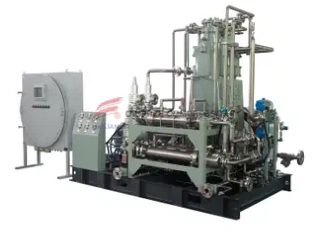
Nitrogen compressors are integral to many industrial operations. The versatility of nitrogen makes it useful across a range of sectors, and a reliable supply of compressed nitrogen is essential for the success of many industrial processes. Below are some key reasons why nitrogen compressors are so important:
One of the primary uses of nitrogen is to create an inert atmosphere. Because nitrogen is chemically inert, it does not react with most materials, making it ideal for preventing unwanted reactions. For example:
In the oil and gas industry, nitrogen is used for purging pipelines and providing an oxygen-free environment for safety and pressurization.
In the chemical industry, nitrogen is used to prevent the oxidation of sensitive materials and to support reactions in a controlled environment.
In these applications, nitrogen compressors provide the necessary pressure and flow rate to ensure a continuous supply of nitrogen to keep systems inert and safe.
Nitrogen is widely used in the food and beverage industry for packaging and preservation. By replacing oxygen in food packaging, nitrogen helps preserve the freshness and shelf life of perishable products. This process is known as modified atmosphere packaging (MAP).
In this industry, nitrogen compressors are essential for producing the required high-purity nitrogen at the correct pressure. For example, in carbonated beverage production, nitrogen compressors help ensure that the nitrogen used in the process is of the right quality and delivered at a consistent pressure to prevent contamination.
Another significant use of nitrogen is in cooling and temperature control in various industries. Nitrogen is used in cryogenics, where extremely low temperatures are required for processes like:
Freezing biological samples and food.
Cooling electronic components during manufacturing to prevent overheating.
In metalworking, nitrogen is used to cool hot metal parts or to control oxidation during processes like welding and heat treatment. In each of these cases, nitrogen compressors are required to provide a reliable supply of pressurized nitrogen for cooling purposes.
In many chemical processes, nitrogen is used to either support or inhibit chemical reactions. For example, in hydrogenation reactions, which are used to produce substances like margarine, nitrogen is often used to maintain the correct environment for the reaction.
Moreover, nitrogen blanketing is used in industries like pharmaceuticals to protect chemicals from reacting with oxygen. Nitrogen compressors play a vital role in ensuring that nitrogen is continuously supplied to these critical chemical processes.
Nitrogen compressors are used across a broad spectrum of industries. Let’s look at some of the key industries that rely on these machines:
Oil and Gas Industry
In the oil and gas sector, nitrogen is used for pipeline purging, pressurization, and tank blanketing. Nitrogen compressors are essential to ensuring the safe transport and storage of oil and gas by maintaining an inert atmosphere that prevents combustion and degradation.
Food and Beverage Industry
In food packaging, nitrogen compressors help provide an inert atmosphere for storing perishable products. They are also used in nitrogen freezing and carbonation processes in the beverage industry.
Pharmaceutical and Healthcare Industry
The pharmaceutical industry uses nitrogen to store and transport sensitive drugs. It is also used in cryopreservation and cold chain logistics to maintain the stability of biologics and other temperature-sensitive materials.
Chemical Manufacturing
In the chemical industry, nitrogen compressors are used for inerting and blanketing to prevent oxidation and other undesirable reactions during manufacturing and storage. Nitrogen is also essential in processes like ammonia production and hydrogenation.
Electronics Manufacturing
In electronics, nitrogen is used to maintain an inert atmosphere during the soldering and assembly of electronic components. Nitrogen helps prevent oxidation and ensures the integrity of sensitive electronic parts.
Metalworking and Aerospace
The aerospace and metalworking industries use nitrogen to cool and treat metals, as well as to ensure controlled environments during welding and casting processes.
There are various types of compressors used for nitrogen production, each designed for specific industrial needs. Some of the most common types include:
Reciprocating Compressors
These are commonly used for low- to medium-volume applications. They use a piston to compress gas and are often found in smaller operations where precise pressure control is needed.
Screw Compressors
Screw compressors are used for medium- to large-scale nitrogen applications. They are efficient, reliable, and suitable for continuous operation, making them ideal for industries that require a steady, high-volume supply of nitrogen.
Centrifugal Compressors
Centrifugal compressors are typically used in large-scale nitrogen applications. They operate by converting kinetic energy into pressure and are suited for industries that need large amounts of nitrogen delivered at a continuous flow rate.
Pressure Swing Adsorption (PSA) and Membrane Systems
For very high-purity nitrogen applications, PSA and membrane systems are used to separate nitrogen from the air and compress it for use in industries like pharmaceuticals and electronics.
Nitrogen compressors are essential for a wide variety of industrial applications, from chemical processing and food packaging to electronics manufacturing and oil and gas production. By providing a continuous, reliable supply of compressed nitrogen, these compressors help industries optimize processes, improve product quality, reduce costs, and enhance safety.
Whether you are looking to maintain an inert atmosphere, cool components, or support chemical reactions, a nitrogen compressor ensures that your operations run smoothly and efficiently. When selecting a nitrogen compressor for your industry, it’s important to consider factors like capacity, purity requirements, and pressure output to ensure that the system meets your specific needs. By understanding the role and functionality of nitrogen compressors, businesses can maximize efficiency, reduce waste, and improve overall operational performance.