
- All
- Product Name
- Product Keyword
- Product Model
- Product Summary
- Product Description
- Multi Field Search

Views: 0 Author: Site Editor Publish Time: 2026-08-09 Origin: Site


The unique molecular properties of hydrogen—specifically its low density, high diffusivity, and reactivity under pressure—render standard gas compression equipment fundamentally unsafe and mechanically unviable. Specifying the wrong materials for a Hydrogen Compressor leads to rapid hydrogen embrittlement, catastrophic pressure boundary failures, accelerated seal degradation, and gas contamination, ultimately jeopardizing facility safety and project ROI. To mitigate these risks, engineers and procurement teams must evaluate compressor materials through a strict lens of metallurgical science and polymer engineering. This guide breaks down the critical material requirements for structural components, wear parts, and specialized compression technologies to ensure safe, reliable, and compliant operation. You will learn exactly how to specify metals and polymers that survive continuous exposure to high-pressure hydrogen environments.
Embrittlement Mitigation: Safe hydrogen compression requires strict yield strength restrictions in metallic components and the use of austenitic stainless steels (e.g., 316/316L) or specialized cladding.
Polymer Durability: Standard elastomers fail rapidly under high-pressure hydrogen; advanced polymeric grades (like filled PTFE or PEEK) are mandatory to counteract degradation and high wear rates.
Purity Requirements: Achieving oil free hydrogen compression for fuel cell or semiconductor applications dictates the use of self-lubricating materials that do not outgas or shed particulates.
Compliance: Material selection directly dictates maintenance intervals. Evaluating materials against standards like API 618 and ASME is non-negotiable for long-term viability.
Engineers must define strict baseline requirements for hydrogen gas containment before selecting any equipment. The system demands absolute containment, structural integrity under cyclic loading, and zero contamination. Standard materials cannot meet these criteria because hydrogen molecules easily escape through microscopic material defects. You must design the system to handle extreme mechanical stress without compromising the gas boundary. A single material failure in a high-pressure hydrogen system leads to immediate safety hazards and process shutdowns. We evaluate every component based on its ability to maintain a perfect seal while enduring continuous mechanical fatigue.
When dealing with hydrogen, the margin for error is nonexistent. The baseline success criteria for any compression system include maintaining a leak-tight boundary under maximum allowable working pressure (MAWP), resisting the permeation of atomic hydrogen, and preventing any particulate or chemical contamination of the gas stream. Standard cast irons and basic carbon steels fail these criteria almost immediately. Engineers must shift their focus to specialized alloys and engineered polymers that can withstand the unique physical and chemical attacks presented by compressed hydrogen gas.
Atomic hydrogen easily permeates metal lattices. It recombines into molecular hydrogen at internal defect sites, such as grain boundaries or inclusions. This recombination causes severe internal pressure that exceeds the tensile strength of the metal. The pressure leads to cracking and a dangerous loss of ductility, transforming a tough metal into a brittle hazard. Cyclic stress inherently accelerates this process. Reciprocating and centrifugal compressors generate continuous cyclic loading. This loading forces hydrogen deeper into the metal structure, causing rapid mechanical failure.
The phenomenon of hydrogen embrittlement (HE) is not a surface-level issue; it is a fundamental degradation of the material's internal structure. When a compressor cylinder undergoes thousands of pressure cycles per hour, the microscopic cracks initiated by hydrogen recombination propagate rapidly. This fatigue-assisted crack growth means that a component might pass a static pressure test but fail catastrophically after a few weeks of operation. Understanding the interaction between cyclic mechanical stress and hydrogen permeation is the foundation of safe compressor design.
Sealing the smallest diatomic molecule presents a massive engineering hurdle. Standard polymers suffer from explosive decompression, a phenomenon also known as Rapid Gas Decompression (RGD). Trapped hydrogen expands rapidly during system depressurization. The sudden expansion destroys standard O-rings and seals from the inside out, leaving them blistered and fractured. You must utilize specialized materials to prevent this catastrophic seal failure. Even microscopic gaps in a seal interface will result in unacceptable leakage rates when handling hydrogen.
To combat permeation and RGD, seal design must incorporate materials with high structural density and low gas solubility. When a compressor shuts down or vents, the pressure drop across the seal happens in seconds. If the polymer cannot release the absorbed hydrogen fast enough, the gas expands internally, rupturing the elastomer. This requires the use of high-modulus materials and specific groove designs that physically constrain the seal, preventing it from expanding and tearing during depressurization events.
Hydrogen possesses a low molecular weight and a high isentropic exponent. These properties cause elevated discharge temperatures during the compression cycle. High thermal generation accelerates metallic fatigue and drastically speeds up polymer degradation. Managing this thermodynamic stress requires materials capable of withstanding continuous high-temperature exposure without losing structural integrity. Cooling systems can only do so much; the materials themselves must be inherently heat-resistant.
The heat of compression in hydrogen applications often pushes standard materials past their thermal limits. For example, a high compression ratio can easily generate discharge temperatures exceeding 150 degrees Celsius. At these temperatures, standard elastomers lose their mechanical strength and begin to extrude through clearance gaps. Metals also suffer, as elevated temperatures can accelerate the diffusion rate of atomic hydrogen into the lattice. Therefore, thermal stability is just as critical as mechanical strength when specifying materials for hydrogen service.
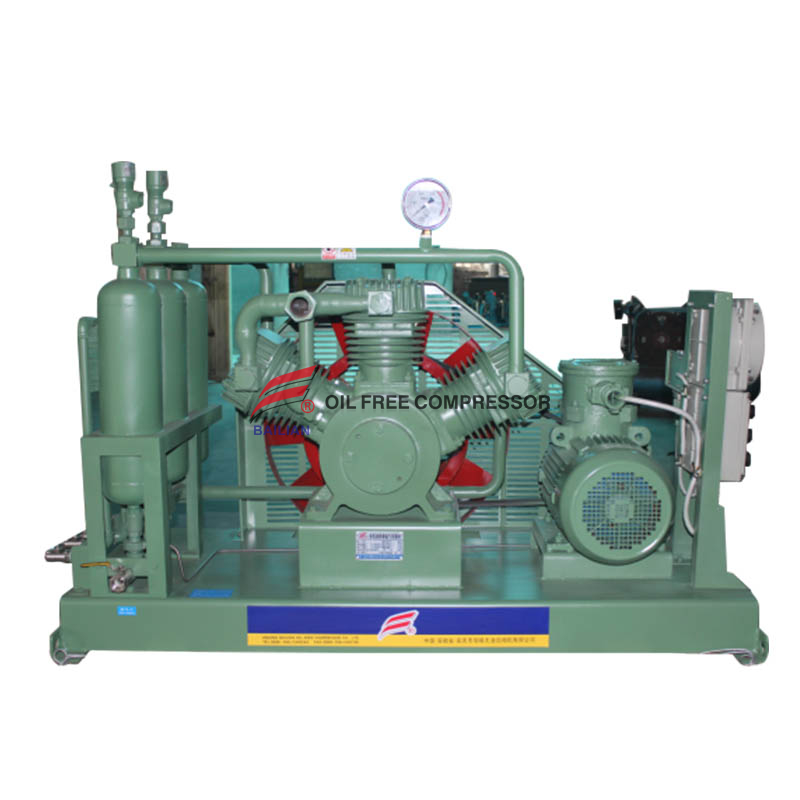
You must restrict the yield strength of materials used in hydrogen service. Engineers typically keep material hardness below 22 HRC (Rockwell Hardness C). This restriction prevents hydrogen-induced cracking. Standard high-strength carbon steels dominate natural gas applications, but these same steels are completely disqualified for high-pressure hydrogen. Their rigid lattice structures make them highly susceptible to sudden, brittle failure when exposed to atomic hydrogen.
The relationship between material hardness and hydrogen embrittlement is well documented in standards like NACE MR0175 and API 618. High-strength steels achieve their properties through heat treatments that create a tight, highly stressed crystalline structure. This structure leaves no room for hydrogen atoms to move without causing severe internal stress. By limiting the hardness to 22 HRC, we ensure the metal retains enough ductility to absorb the internal pressures generated by hydrogen recombination without initiating cracks.
The industry relies heavily on 300-series stainless steels for a hydrogen compressor. Grades 316 and 316L are particularly effective. They feature a face-centered cubic (FCC) crystal structure. This specific structure naturally resists hydrogen permeation and embrittlement. Nickel and chromium content play a critical role here. These elements stabilize the austenitic phase under intense mechanical stress, ensuring long-term pressure boundary integrity.
The FCC structure of austenitic stainless steel provides a higher solubility for hydrogen but a significantly lower diffusion rate compared to the body-centered cubic (BCC) structure of carbon steel. This means hydrogen moves through 316L much slower, drastically reducing the risk of embrittlement. Furthermore, the "L" in 316L stands for low carbon, which prevents carbide precipitation during welding. This is crucial for maintaining the material's corrosion resistance and structural integrity at welded joints within the compressor system.
Solid stainless steel cylinders are expensive and sometimes impractical for massive industrial machines. Engineers often use stainless-steel cladding over lower-cost carbon steel substrates. This approach balances safety and material expenses for large compressor cylinders. Physical vapor deposition (PVD) barrier coatings offer another layer of protection. Diffusion barriers expand the operating limits and pressure ratios of the equipment by sealing microscopic surface defects and preventing hydrogen entry.
Cladding involves metallurgically bonding a layer of 316L stainless steel to the inner bore of a carbon steel cylinder. The carbon steel provides the necessary bulk strength to handle the pressure, while the stainless steel cladding acts as an impermeable barrier to the hydrogen gas. Surface treatments like nitriding or specialized ceramic coatings can also be applied to valve components and piston rods to increase wear resistance while simultaneously acting as a barrier against hydrogen permeation.
Different compressor types require specific metallurgical strategies to function safely. Diaphragm compressors utilize high-strength nickel-chromium alloys like Inconel 718. They also use cold-worked austenitic stainless steels for flexible, fatigue-resistant diaphragms. Reciprocating compressors rely on cast or forged 316/316L cylinders and use low-hardness carbon steels for external structural components. Centrifugal compressors require careful impeller material trade-offs. Designers must balance the high yield strength needed for tip speeds against the low hardness required to prevent hydrogen-induced stress cracking.
Compressor Component | Recommended Material | Primary Failure Risk Mitigated | Hardness Limit |
|---|---|---|---|
Pressure Cylinders | 316/316L Stainless Steel | Hydrogen Embrittlement | < 22 HRC |
Diaphragms | Inconel 718 | Cyclic Fatigue & Permeation | N/A (Specialized Alloy) |
External Structures | Carbon Steel | Stress Cracking (HISC) | < 22 HRC |
Piston Rods | Nitronic 50 or Coated 4140 | Wear and Embrittlement | Surface Hardened Only |
Valves | PEEK / 316L | Impact Fatigue | < 22 HRC (Metals) |
Standard elastomers fail quickly in hydrogen environments. Materials like Buna-N and standard Viton harden, crack, and lose elasticity. Dry hydrogen gas lacks lubricity, which accelerates friction-induced wear on moving parts. You must evaluate advanced polymeric grades engineered specifically for these harsh conditions. High-performance polymers counteract degradation and survive the high wear rates typical of continuous gas compression.
The lack of moisture and lubricating oils in pure hydrogen streams creates a severe tribological challenge. When standard polymers rub against metal cylinder walls in a dry hydrogen environment, the friction generates localized hot spots. These hot spots cause the polymer to melt, smear, and rapidly degrade. To solve this, engineers utilize highly engineered composites that incorporate solid lubricants directly into the polymer matrix, ensuring a low coefficient of friction even in completely dry conditions.
Non-lubricated cylinders require specialized self-lubricating polymers. Achieving reliable oil free hydrogen compression depends heavily on filled PTFE blends. Manufacturers use carbon, bronze, or silica fillers to enhance durability and thermal conductivity. PEEK (Polyether ether ketone) is another excellent choice for valve components. Engineers must carefully balance wear rates, thermal conductivity, and friction coefficients when designing these oil-free systems.
Filled PTFE is the cornerstone of non-lubricated compressor design. Pure PTFE has excellent chemical resistance and low friction, but it suffers from cold flow and poor wear resistance under heavy loads. By adding fillers like carbon fiber or bronze, the mechanical strength and thermal conductivity of the PTFE are drastically improved. This allows the piston rings and rider bands to transfer the heat of friction away from the sealing interface and into the cooled cylinder walls, preventing premature failure.
The heat of compression directly threatens polymer integrity. High temperatures soften seals, making them vulnerable to pressure extrusion. Anti-extrusion rings are absolutely necessary in high-pressure applications. You must use high-modulus materials to prevent seal blowout under high compression ratios. Proper material selection ensures seals maintain their shape and containment properties during peak thermal loads.
Extrusion occurs when the pressure differential across a seal forces the softened polymer into the microscopic clearance gap between the piston and the cylinder. Once the polymer enters this gap, it is sheared off by the reciprocating motion, leading to rapid seal destruction. To prevent this, backup rings made of rigid materials like PEEK or metallic alloys are installed behind the primary elastomer seal. These backup rings bridge the clearance gap and physically block the softer seal from extruding.
End-use applications demand strict purity requirements. PEM fuel cells require ISO 14687 Grade D hydrogen. Semiconductor manufacturing demands similar ultra-high purity levels. Material wear presents a massive contamination risk. Particulate shedding from PTFE or PEEK seals can ruin downstream processes. Lubricant carryover will permanently poison delicate fuel cell catalysts. You must select materials that do not outgas or shed debris during operation.
The catalyst layers in PEM fuel cells are highly sensitive to impurities. Even trace amounts of hydrocarbons from compressor lubricating oil can coat the platinum catalyst, permanently reducing the fuel cell's efficiency and lifespan. Similarly, microscopic polymer dust generated by the wear of piston rings can clog the fine flow channels in fuel cell bipolar plates. Therefore, the materials selected for the compressor must not only survive the hydrogen environment but also operate without generating any contaminants.
Specifying a high purity hydrogen compressor involves comparing dry-running materials against traditional lubricated systems. Lubricated systems require complex, heavy filtration to achieve gas purity. Dry-running materials eliminate oil contamination but face shorter operational lifespans due to friction. You must assess the implications of specifying ultra-high-purity compatible materials upfront versus managing the burden of downstream gas purification.
While lubricated compressors offer longer intervals between maintenance for the internal wear parts, the required downstream filtration systems are expensive, bulky, and require constant monitoring. If a coalescing filter fails, the entire downstream process is contaminated. Oil-free compressors utilizing advanced filled PTFE and PEEK materials eliminate this risk entirely. The trade-off is that the piston rings and rider bands in an oil-free machine will wear out faster and require more frequent replacement, but the guarantee of absolute gas purity often justifies this maintenance schedule.
Ionic liquid piston compressors utilize specialized liquids instead of solid metal pistons. This technology eliminates traditional mechanical wear parts like piston rings. The material focus shifts entirely to liquid stability and gas solubility. You must evaluate the chemical compatibility of the ionic liquids used for high-pressure hydrogen compression. The liquid must not degrade or absorb excessive hydrogen during the compression cycle.
In an ILPC, the ionic liquid acts as both the piston and the liquid seal. These liquids are essentially molten salts at room temperature, possessing virtually zero vapor pressure. This means they do not evaporate into the hydrogen gas stream, maintaining high purity. However, the materials used for the compressor housing and valves must be completely compatible with the specific ionic liquid to prevent galvanic corrosion or chemical degradation over time.
Thermal hydrogen compression relies on metal hydrides. These materials absorb hydrogen at low temperatures and release it at high temperatures. This process requires specific intermetallic compounds. AB5 and AB2 type alloys are standard for this application. Engineers must evaluate how these alloys degrade over thousands of thermal cycles. Material breakdown reduces compression efficiency and limits system lifespan.
Metal hydride compressors have no moving parts, making them incredibly reliable from a mechanical standpoint. The compression is achieved entirely through the application of heat. However, the intermetallic powders expand and contract significantly as they absorb and release hydrogen. This volumetric change can cause the powder particles to fracture and break down into finer dust over time. The containment vessels must be designed to handle this expansion without rupturing, and filters must be in place to prevent the fine hydride dust from migrating out of the compressor.
Electrochemical compressors utilize Proton Exchange Membranes (PEM). These systems operate under highly acidic and high-pressure conditions. You must evaluate the stability of perfluorosulfonic acid (PFSA) membranes. Platinum-group metal (PGM) catalysts drive the electrochemical reaction. Titanium-coated bipolar plates distribute the gas and conduct electricity. All these materials must resist severe chemical corrosion while maintaining structural integrity.
EHC technology compresses hydrogen by ionizing it, moving the protons across a membrane, and recombining them at a higher pressure. The environment inside an EHC cell is extremely aggressive. The PFSA membrane is highly acidic, and the presence of high-pressure hydrogen and electrical current creates a perfect storm for corrosion. Standard metals will dissolve rapidly in this environment. Therefore, expensive materials like platinum, iridium, and titanium are absolutely mandatory to ensure the compressor survives.
Handling liquid or cryo-compressed hydrogen introduces extreme thermal challenges. Operating temperatures drop below -250 degrees Celsius. Most metals become dangerously brittle at these cryogenic temperatures. You must identify unique materials capable of maintaining ductility and impact resistance. Specialized austenitic stainless steels and specific aluminum alloys are mandatory for safe cryogenic liquid hydrogen pumping.
At liquid hydrogen temperatures (20 Kelvin), carbon steel shatters like glass under minor impact. Materials must be selected based on their Charpy V-notch impact test results at cryogenic temperatures. 316L stainless steel and 6061-T6 aluminum are the primary choices because their crystal structures do not undergo a ductile-to-brittle transition. Furthermore, any polymers used for static seals must be specially formulated, as standard elastomers will freeze solid and lose all sealing capability.
Audit your current compressor specifications to ensure all pressure-bearing metals maintain a hardness below 22 HRC to prevent embrittlement.
Upgrade standard elastomer seals to RGD-resistant polymers like filled PTFE or PEEK to prevent explosive decompression during shutdowns.
Transition to self-lubricating wear parts immediately if your end-use application requires strict ISO 14687 Grade D purity compliance.
Implement stainless-steel cladding on large carbon steel cylinders to balance safety requirements with material budgets effectively.
Establish a strict material traceability program to verify the exact metallurgical composition of all replacement parts before installation.
A: Standard high-strength carbon steel is highly susceptible to hydrogen embrittlement. Atomic hydrogen permeates the metal lattice, recombines, and causes internal pressure. This leads to cracking and catastrophic brittle failure under high pressure.
A: Austenitic stainless steels, specifically grades 316 and 316L, are the industry standard. Their face-centered cubic crystal structure naturally resists hydrogen permeation and prevents embrittlement.
A: Hydrogen gas permeates standard elastomers under high pressure. During depressurization, the trapped gas expands rapidly. This causes explosive decompression, tearing the seals apart from the inside.
A: Oil-free compression relies on self-lubricating polymers. Filled PTFE blends (using carbon or bronze) and PEEK are standard. They provide low friction and high wear resistance without liquid lubricants.
A: In high-purity applications like fuel cells, shed particulates from polymer seals can contaminate the gas stream. This debris, along with any oil carryover, can permanently poison sensitive fuel cell catalysts.