
- All
- Product Name
- Product Keyword
- Product Model
- Product Summary
- Product Description
- Multi Field Search

Views: 0 Author: Site Editor Publish Time: 2026-10-25 Origin: Site


Are you tired of the relentless sting of rising liquid nitrogen delivery costs? Picture the frustration of halting a critical laser cutting line simply because a third-party delivery truck is delayed. Paying for recurring cylinder deliveries drains industrial budgets rapidly. Facility managers are constantly searching for a more sustainable approach.
Generating and compressing your own nitrogen on-site offers a smart, resilient, and highly cost-effective alternative. At the heart of this setup is the compressor. This vital piece of machinery dictates both your initial investment and long-term savings. Recent market data highlights a massive shift in industrial gas procurement. Supply chain disruptions and volatile fuel surcharges have made traditional liquid nitrogen contracts increasingly risky. Consequently, manufacturing sectors are aggressively pivoting toward decentralized on-site generation. This transition is no longer just about cutting costs. It is a fundamental strategy to guarantee uninterrupted production.
In this comprehensive guide, we will break down typical equipment costs and explore hidden installation fees. We will also analyze the expected Return on Investment to help procurement officers and plant engineers make informed, budget-friendly purchasing decisions.
For procurement teams evaluating capital equipment, understanding the baseline financial commitment is the crucial first step. The cost of compressing nitrogen varies significantly based on the scale and intensity of the operation. Below is an objective breakdown of average market pricing.
Entry-level systems are engineered specifically for low-flow applications and standard pressure requirements. These compact units feature a smaller footprint. They are highly suitable for laboratory environments, small-scale food packaging lines, or boutique manufacturing. At this accessible price point, buyers can expect single-stage compression mechanisms. While undeniably cost-effective, these machines are generally not designed for grueling continuous duty cycles. Instead, they serve as excellent introductory models. Facilities can eliminate small-scale cylinder rentals without committing to massive capital expenditures.
Moving up the spectrum, the mid-range tier represents the gold standard for most medium-to-large manufacturing facilities. These robust compressors are built for continuous, heavy-duty cycles. They support the higher flow rates demanded by intensive applications like laser cutting, electronics wave soldering, and chemical tank blanketing. In this bracket, you will find sophisticated cooling systems and advanced programmable logic controllers. The materials used in these units are graded for true industrial longevity. They perfectly bridge the gap between upfront affordability and reliable, round-the-clock output.
High-end pricing is reserved for highly specialized, mission-critical applications where failure is not an option. Industries such as aerospace, deep-hole oil and gas drilling, and pharmaceutical manufacturing mandate exacting standards. Budget models simply cannot meet these requirements. This category includes ultra-high-pressure systems capable of exceeding 300 bar. You will also find 100% oil-free systems built with aerospace-grade Teflon coatings. Consequently, the elevated price tag reflects complex multi-stage compression blocks, redundant safety valves, and water-cooled thermal management systems.
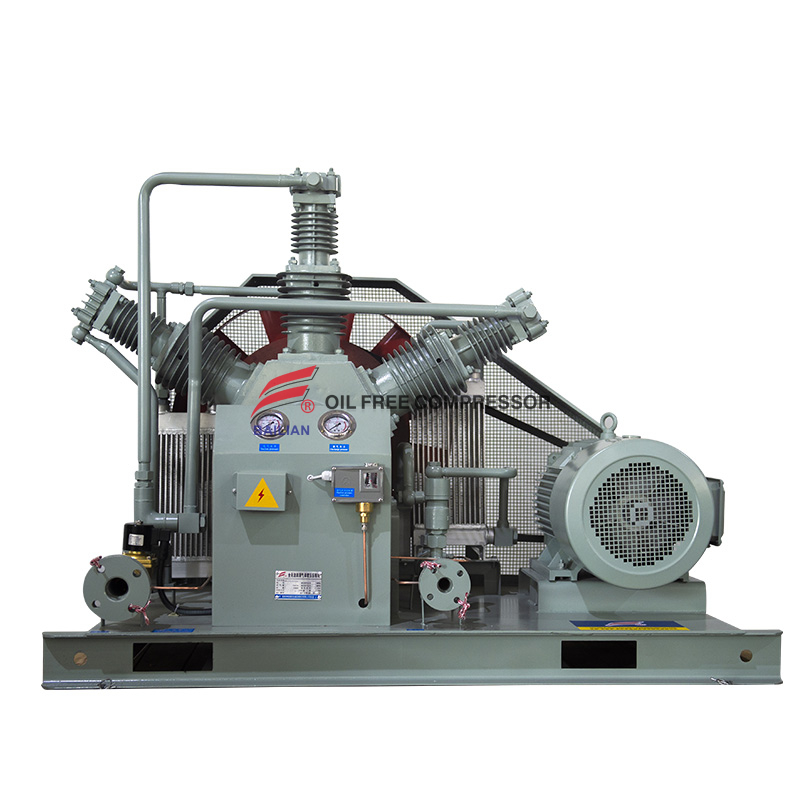
Understanding why two seemingly similar machines carry vastly different price tags requires a closer examination of their technical specifications. Equipment pricing is rarely arbitrary. Rather, it is driven by physical engineering constraints and raw material costs.
The sheer volume of nitrogen gas a machine can process in a given minute directly dictates its physical size. Higher flow rates require oversized electric motors, massive compressor blocks, and larger intake valves. For instance, a system designed to process 500 cubic feet per minute requires significantly more cast iron, copper winding, and forged steel than a compact 50 CFM unit. This naturally inflates the manufacturing cost.
Achieving standard industrial pressure is relatively inexpensive. However, as applications demand higher pressure, the engineering complexity scales exponentially. A high pressure nitrogen compressor must utilize sophisticated multi-stage compression. The gas is compressed, cooled, and compressed again multiple times. To withstand this extreme mechanical stress, internal components must be precision-machined from high-tensile alloys. This substantially drives up the base price.
Nitrogen produced by Pressure Swing Adsorption or membrane generators can reach remarkable purities of up to 99.999%. The equipment handling this gas must maintain that pristine purity without introducing ambient moisture, particulate matter, or lubricating oils. Compressors designed specifically for ultra-high purity applications feature specialized internal sealing mechanisms. Non-reactive internal coatings prevent any degradation of gas quality.
Standard lubricated models rely on petroleum or synthetic oils to reduce friction and dissipate heat within the compression chamber. While cheaper to manufacture, they carry the inherent risk of oil carryover. In contrast, an oil free nitrogen compressor utilizes precision-engineered clearances, self-lubricating rings, and specialized cooling jackets. The advanced metallurgy and tighter manufacturing tolerances required for true oil-free operation typically result in a 20% to 40% higher upfront cost. This is ultimately offset by the elimination of downstream filtration expenses.
The term nitrogen compressor is actually a broad umbrella category. It encompasses several distinct pieces of equipment. Each serves a highly specific function within the gas generation and storage ecosystem. Identifying the exact type of machinery your facility requires is crucial for accurate budgeting.
Technically an air compressor optimized to feed a generation system, this unit intakes ambient air. It compresses the air and pushes it through a generator to separate nitrogen molecules from oxygen. Because it handles standard ambient air rather than pure nitrogen gas, a nitrogen generator compressor is often less expensive than specialized gas boosters. Standalone replacement costs generally range from $5,000 to $20,000, depending heavily on feed air pressure requirements and rotary screw versus piston designs.
Placed downstream from the generation unit, this machine handles pure gas. Since most generators output nitrogen at relatively low pressures, a nitrogen booster compressor takes this pure gas and elevates it to a much higher working pressure. For demanding industrial tasks like fiber laser cutting, pressures of 150 bar to 200 bar at flow rates of 10 to 50 Nm3/h are common. These units must be hermetically sealed to prevent pure nitrogen from escaping or ambient oxygen from infiltrating. Prices typically range from $5,000 to $25,000.
For businesses operating in remote locations or those requiring portable gas solutions, a nitrogen cylinder filling compressor acts as a localized, independent gas plant. It allows facilities to fill their own high-pressure storage cylinders on-site. While the initial investment is notable, typically $20,000 to $60,000, this specific type of machinery offers massive operational savings. By filling cylinders internally, a business entirely circumvents the steep markups, delivery fees, and hazmat charges associated with purchasing pre-filled tanks.
| Compressor Type | Typical Pressure Range | Estimated Upfront Cost | Best Application Scenario |
|---|---|---|---|
| Standard Feed Air Compressor | 7 to 10 Bar | $5,000 - $15,000 | Feeding PSA or Membrane Nitrogen Generators. |
| Industrial Gas Booster | 20 to 40 Bar | $8,000 - $25,000 | Laser cutting, plastic injection molding, and tank blanketing. |
| High-Pressure Cylinder Filling | 150 to 300 Bar | $20,000 - $60,000 | Filling portable storage tanks, aerospace testing, deep-hole drilling. |
| 100% Oil-Free Compressor | Variable | $15,000 - $75,000+ | Food and beverage, pharmaceuticals, semiconductor manufacturing. |
When evaluating pricing, focusing solely on the sticker price is a common and costly procurement error. A comprehensive financial analysis must divide the total lifecycle cost into Capital Expenditure and Operational Expenditure. For buyers justifying a major purchase to executive management, mastering this distinction is critical.
Capital Expenditure represents the fixed, one-time costs associated with acquiring the equipment and bringing it fully online. This includes the upfront invoice price of the machine itself. Furthermore, you must account for installation and commissioning costs. Rigging, anchoring the machine to a reinforced concrete pad, electrical grid connections, and initial factory-certified startup testing all add up. Upgrading facility infrastructure with high-pressure stainless steel piping to route the gas also falls under this category.
Operational Expenditure encompasses the recurring, day-to-day costs required to keep the system running smoothly over its lifespan. Historically, operational costs far exceed capital costs in the world of industrial machinery. Electricity consumption is the single largest ongoing expense. Facilities can mitigate this by investing in Variable Speed Drive technology, which adjusts motor speed to match real-time gas demand. Routine maintenance also factors heavily into the long-term budget.
The primary driver for investing in compression equipment is the dramatic financial return achieved by abandoning delivered gas contracts. Relying on external gas suppliers introduces a tangled web of compounding, recurring fees. Beyond the base price of the liquid nitrogen itself, businesses are hit with fuel surcharges and hazardous material transport fees applied to every single delivery. Worse still, liquid nitrogen boils at room temperature. If stored in a dewar, up to 2% of the liquid can evaporate daily. You pay for gas that simply vanishes into the atmosphere.
Consider a mid-sized metal fabrication plant currently spending $1,700 per month on delivered nitrogen cylinders. If they invest $20,000 in a complete on-site generation and compression system, their monthly electricity and maintenance costs might equal just $300. Their new monthly expense drops by $1,400. Dividing the $20,000 initial cost by the $1,400 monthly savings reveals a breakeven point of just 14.2 months. For the remaining decade of the equipment's lifespan, the facility enjoys nearly free nitrogen.
Transparency is vital when budgeting for heavy machinery. While reputable manufacturers provide clear and detailed quotes, buyers must proactively account for ancillary expenses. Salespeople might not explicitly highlight these during the initial pitch.
Installation and site preparation often carry hidden fees. Compressors generate significant heat and vibration. You may need to upgrade facility ventilation, pour new concrete padding, or install acoustic dampening enclosures to meet strict occupational noise regulations. Additionally, compressors require exceptionally clean, dry intake gas. You may need to purchase supplementary refrigerated air dryers or desiccant filters to protect internal valves from moisture damage. Finally, always inquire about the cost of original equipment manufacturer rebuild kits and factor in shipping freight.
Selecting the optimal machine requires a systematic, data-driven approach. This ensures you do not overpay for unnecessary capacity, nor under-spec a unit that will burn out prematurely under stress. Follow these practical engineering steps.
First, define your peak flow accurately. Measure the maximum cubic meters per hour your facility consumes during full production shifts. Oversizing leads to wasted electricity, while undersizing causes catastrophic production bottlenecks. Second, determine your exact discharge pressure. Laser cutting typically needs 20 to 30 bar, whereas cylinder filling demands 150 to 300 bar. Next, specify your purity needs. Do not pay a premium for 99.999% high-purity systems if your specific application only requires 95% purity. Always evaluate the total lifecycle cost over a 10-year period.
While the typical cost of industrial compression equipment requires a notable initial capital investment, the strategic elimination of third-party gas delivery makes it highly profitable. By understanding the nuances of flow rates, pressure demands, and the critical differences between capital and operational expenditures, procurement teams can navigate the market with confidence.
Stop paying premium prices to rent your nitrogen. Take control of your gas supply, eliminate delivery bottlenecks, and drastically improve your bottom line. We highly recommend exploring professional-grade solutions tailored to your operational needs. Visit https://www.oxygen-compressors.com to browse reliable industrial compressors, review detailed technical parameters, and request a custom quote for your facility today.
With proper, scheduled maintenance, an industrial unit can reliably last 10 to 15 years. This equates to roughly 40,000 to 60,000 operating hours before requiring a major overhaul or replacement.
Yes, especially if your industry requires zero risk of oil contamination, such as food and beverage, pharmaceuticals, or electronics manufacturing. While the upfront price is higher, it saves substantial money over time by eliminating the need to frequently replace expensive inline coalescing filters.
No. While standard air compressors are used to feed ambient air into the generator, the pure gas that exits the generator requires a specialized booster. This booster is designed specifically to handle dry, pure nitrogen safely without dangerous leaks or oxygen contamination.
Annual maintenance costs typically run between 5% to 10% of the initial purchase price. This budget covers necessary consumables like replacement filters, specialized lubricants, and routine mechanical inspections.
Absolutely. If your facility consumes a high volume of portable cylinders, filling them yourself on-site reduces the cost per cylinder from dozens of dollars in delivery and rental fees to mere pennies in electrical consumption.
Power consumption varies widely based on the motor size and discharge pressure. A small booster might consume 3 to 5 kW per hour, while heavy-duty industrial systems operating at 300 bar can draw 45 kW to 75 kW or more. Utilizing variable speed drives can reduce energy consumption by up to 30% during off-peak hours.
Modern skid-mounted systems are surprisingly compact. A mid-range setup, including the generator, feed compressor, high-pressure booster, and storage tanks, can typically fit within a 150 to 300 square foot footprint. However, you must also account for adequate clearance around the machines for proper ventilation and maintenance access.